How Much Food Should You Store? A Simple Guide to Building an Emergency Pantry
Once you start learning about food storage and emergency pantry building, one of the first questions that comes up is: how much food should you actually store?
And honestly—that’s where a lot of people get stuck.
Because it starts to feel overwhelming… like there’s no clear answer and maybe it’s not even worth starting.
But here’s the truth:
There is no one-size-fits-all answer.
And that’s actually good news—because it means your pantry can be built around your real life, your real family, and your real budget.
Start With Your Family, Not a Formula
Every home looks different.
For example, we’re a family of four with a pet we also feed. But your household might look completely different:
- more children
- fewer people
- different dietary needs
- different schedules
So instead of starting with “how much should I store,” start with:
How many people am I feeding?
Include pets and anyone who relies on your home for meals.
What does our daily eating actually look like?
Ask yourself:
- Do leftovers carry into lunch?
- Do I cook 3 full meals every day?
- Do we rely on quick or grab-and-go meals?
This helps you understand your real food rhythm—not an ideal one.
What is my grocery budget?
This is where most people feel tension.
Ask:
- Can I increase my grocery budget by even $20–$50 a week?
- Or do I need to be more intentional with meal planning and sales?
Either is okay. The key is awareness.
How much storage space do I actually have?
Be realistic:
- Do I have room for bulk buckets?
- A deep freezer?
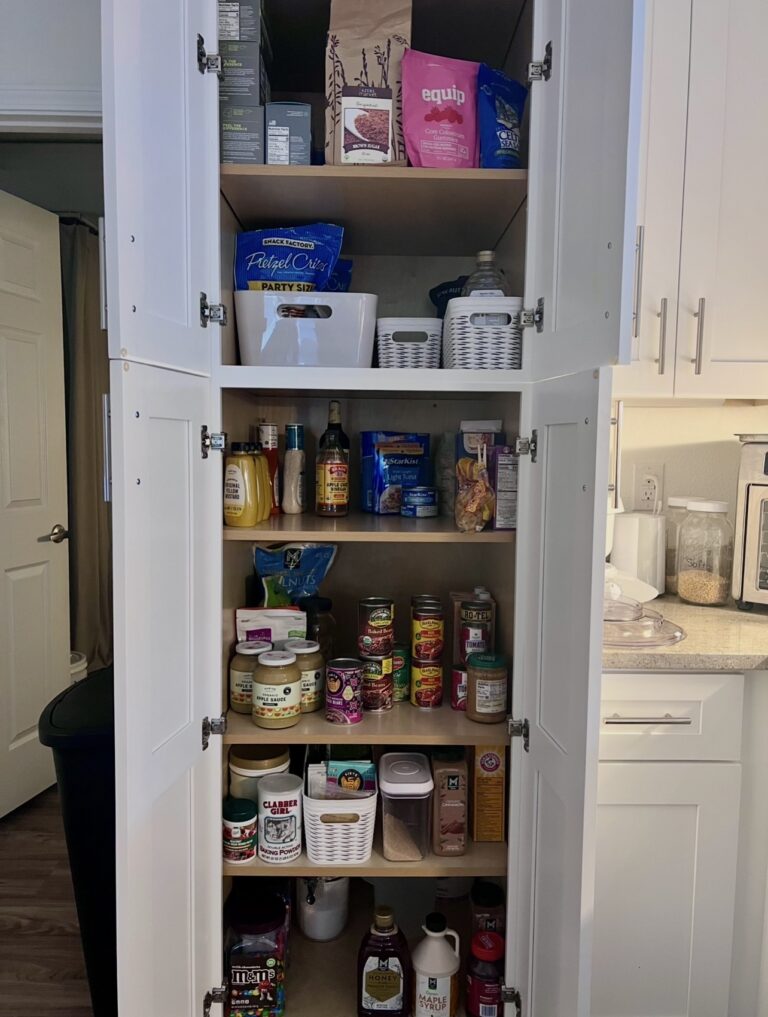
- Or just a few cabinets?
Your storage space will naturally shape your pantry size.
What does my weekly life actually look like?
Consider:
- busy schedules
- school routines
- work hours
- how often you cook from scratch
This determines whether you need more:
- quick meals
- freezer meals
- or slow-cooked, sit-down meals
If you’re still unsure what a working pantry vs emergency pantry actually is, you can read that breakdown here.
The Simplest Way to Start: Two Weeks of Food
If you’re unsure where to begin, start here:
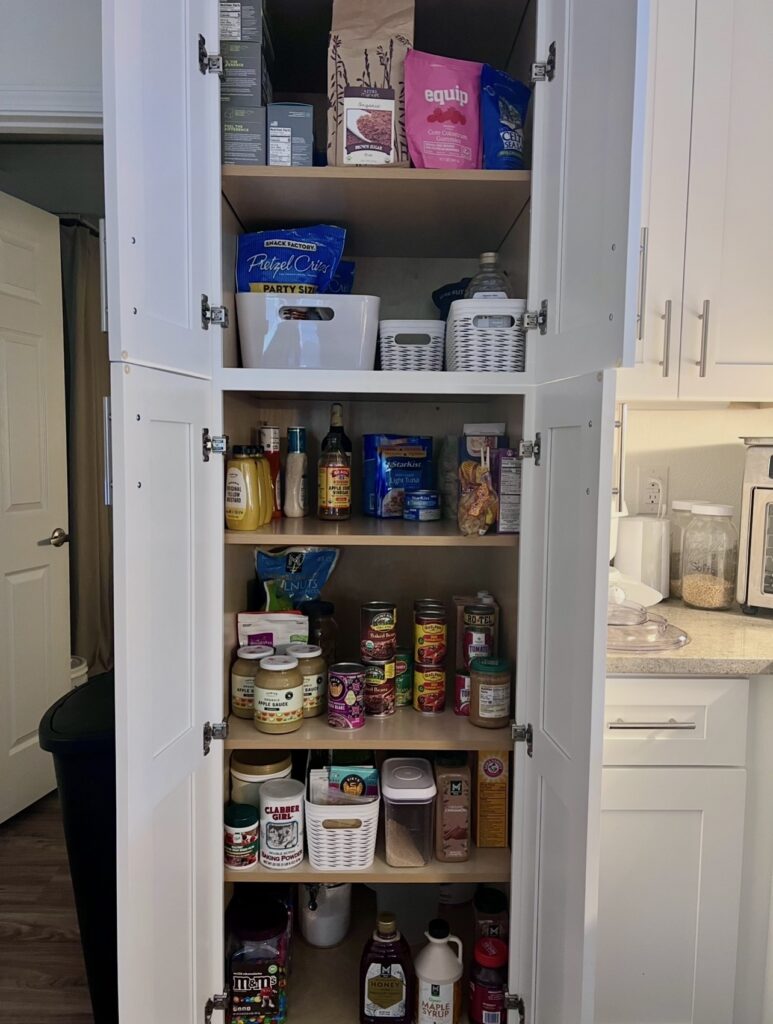
Build a two-week food supply.
Not a year. Not six months. Just two weeks.
On your normal grocery trip:
- plan your meals first
- shop as usual
- then double what you reasonably can
For example:
If you’re making tacos, maybe you can’t double the meat—but you can add:
- extra canned beans
- extra corn
- extra salsa
Little by little, those extras build into real storage.
Over time, you slowly reach a point where you could stay home for two weeks and still feed your family comfortably. Proverbs reminds us:
“The plans of the diligent lead surely to abundance, but everyone who is hasty comes only to poverty.”
–Proverbs 21:5
Then you repeat the process again.
Then Build to One Month
Once two weeks feels manageable, you build another layer.
This brings you closer to a one-month household supply, which includes more than just food:
- toilet paper
- paper towels
- soap and shampoo
- laundry detergent
- feminine care
- trash bags
This becomes your “we don’t need to run to the store” buffer.
It also becomes your first true system of:
replacing + replenishing + slowly growing
Think of it like always shopping ahead for the next month, not just the next week.
The Real Goal: Three Months of Stability
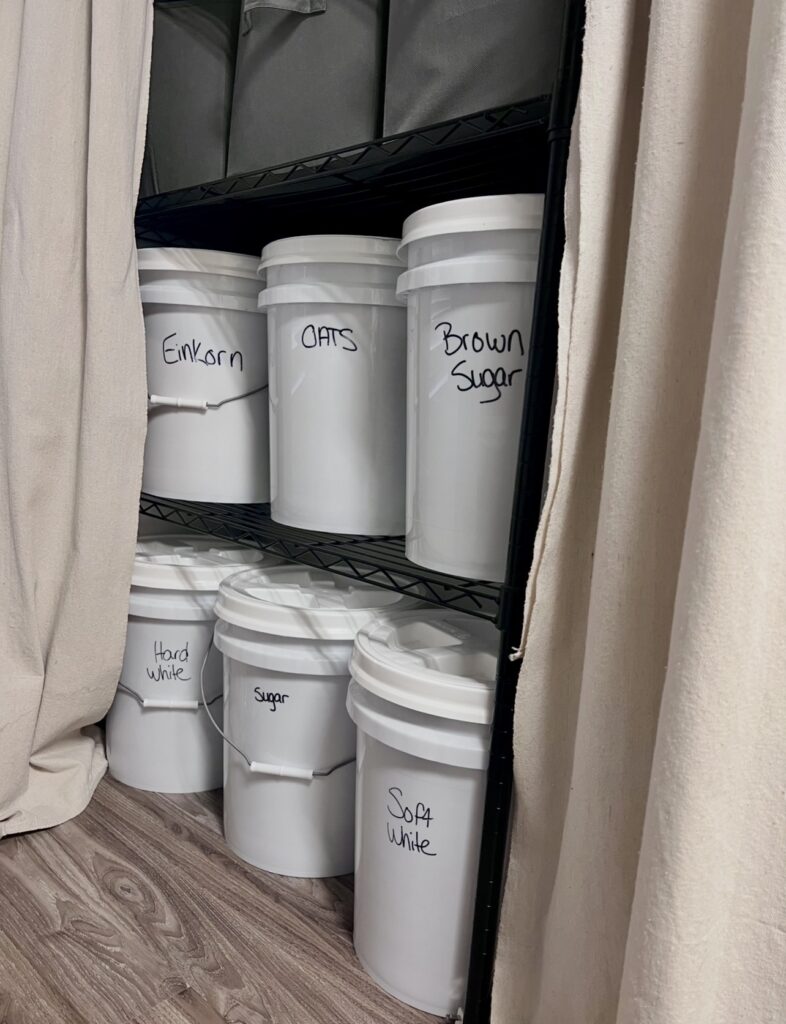
For me personally, three months of household supply is not extreme.
It feels like peace.
Not because I expect something bad—but because it creates breathing room.
At this point:
- grocery trips shift from survival → maintenance
- budgeting becomes intentional, not reactive
- you’re no longer starting from zero each week
It’s similar to an emergency fund in savings:
you hope you don’t need it, but you’re grateful it’s there.
Common Mistakes (That Make This Feel Harder Than It Is)
1. Trying to build everything at once
This is the biggest one.
This is not meant to be panic buying or overnight stocking.
It’s slow, steady building over time.
2. Buying foods you don’t actually eat
If your family doesn’t like it, don’t store it.
Even if it’s cheap.
Expired food you never used is still wasted money.
3. Overcomplicating the process
This is not about perfection.
It’s about consistency.
A Stewardship Mindset (Not a Fear Mindset)
Building a pantry is no different than:
- caring for your home
- maintaining your car
- managing your finances
- making your bed each day
It’s stewardship.
Not fear.
We prepare because we recognize that life has seasons—some easier, some harder—and we want to care for our families wisely through all of them.
Final Thoughts
You don’t need to figure it all out today.
Start with what you have.
Add a little extra each trip.
Build slowly and intentionally.
A pantry is not built in a day—it’s built in seasons of faithfulness.