Back-to-School Homeschool Prep for Moms: Home Reset, Curriculum Planning & Daily Rhythm
Affiliate Disclosure: This post contains affiliate links. As an Amazon Associate, I earn from qualifying purchases at no extra cost to you.
Where do you even start?
As a homeschool mom who teaches year-round, there isn’t always a dramatic “back-to-school switch” in our home. But there is a shift that happens internally every summer.
Right now, I find myself in that in-between space—thinking ahead, planning curriculum, and slowly preparing our home for a new school year.
If you’ve ever felt overwhelmed wondering where to start with back-to-school homeschool prep, you’re not alone. It can feel like there’s so much to do before you even begin.
But I’ve learned something over the years:
One generation shall commend your works to another, and shall declare your mighty acts.
– Psalm 145:4
You don’t need everything done to start well—you just need a starting point.
Start with curriculum, not perfection
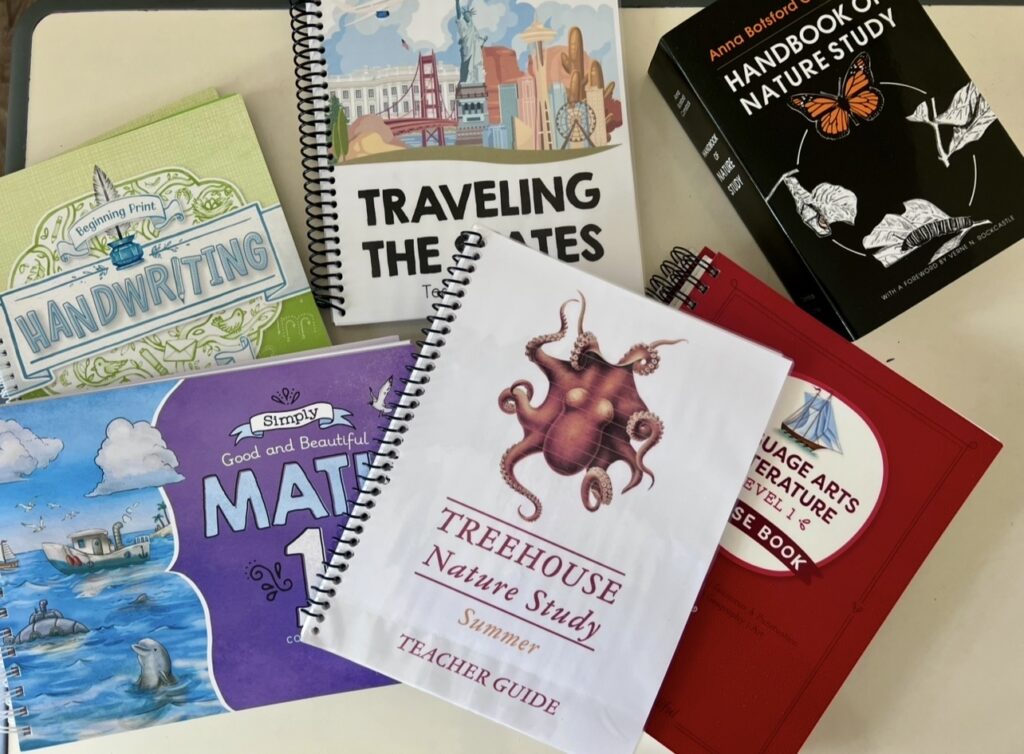
For me, the most important part of back-to-school prep always starts with curriculum.
Spring is usually when I’m researching, comparing, and figuring out what will actually fit my children best. Not just what looks beautiful or popular—but what aligns with how they learn and what fits our family values.
There are so many beautiful homeschool setups online, but when you get down to it, what matters most is this:
Does this help my child learn well—and does it work for our real life?
I also try to choose early when I can. If I know what I’m using and it goes on sale, I go ahead and purchase it instead of waiting until the last minute.
And if I ever change my mind later? I change it. Homeschooling gives you that freedom.
Finding homeschool community matters more than I realized
This is something I didn’t prioritize in my first couple of years homeschooling, and I can really see the difference now.
Having a homeschool community doesn’t mean you have to join a co-op or follow a strict group structure. For us, it’s more about connection and support.
I recently found a local homeschool group that organizes field trips, and it’s been such a blessing—not just for the kids, but for me too.
If you’re just starting out, I really encourage you to look for community early. That might look like:
- Local homeschool groups
- Library programs
- Sports or gymnastics classes
- Homeschool field trip groups
- Church or community connections
These things fill up faster than you think, so it helps to start early rather than wait.
Think about your weekly rhythm now
One of the most helpful things you can do before the school year starts is simply ask:
What do I want our weeks to look like?
How many days are we staying home?
How often do we want to go out for lessons, classes, or outings?
You don’t need a rigid schedule yet—but having a general idea of your weekly rhythm helps shape everything else, including curriculum choices and daily flow.
How I’m setting up our homeschool space (in progress)
Right now, our home is in transition.
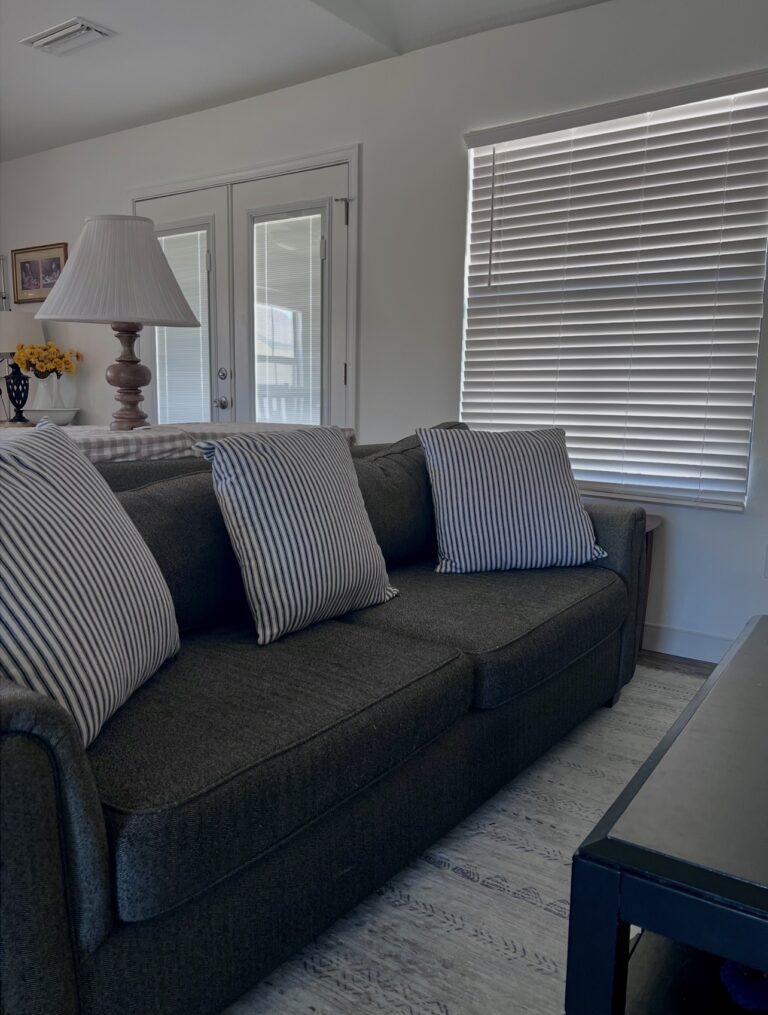
I recently moved my office into our master closet, and I turned our front room into our homeschool space. It’s not finished, and it’s not decorated yet—but that’s intentional.
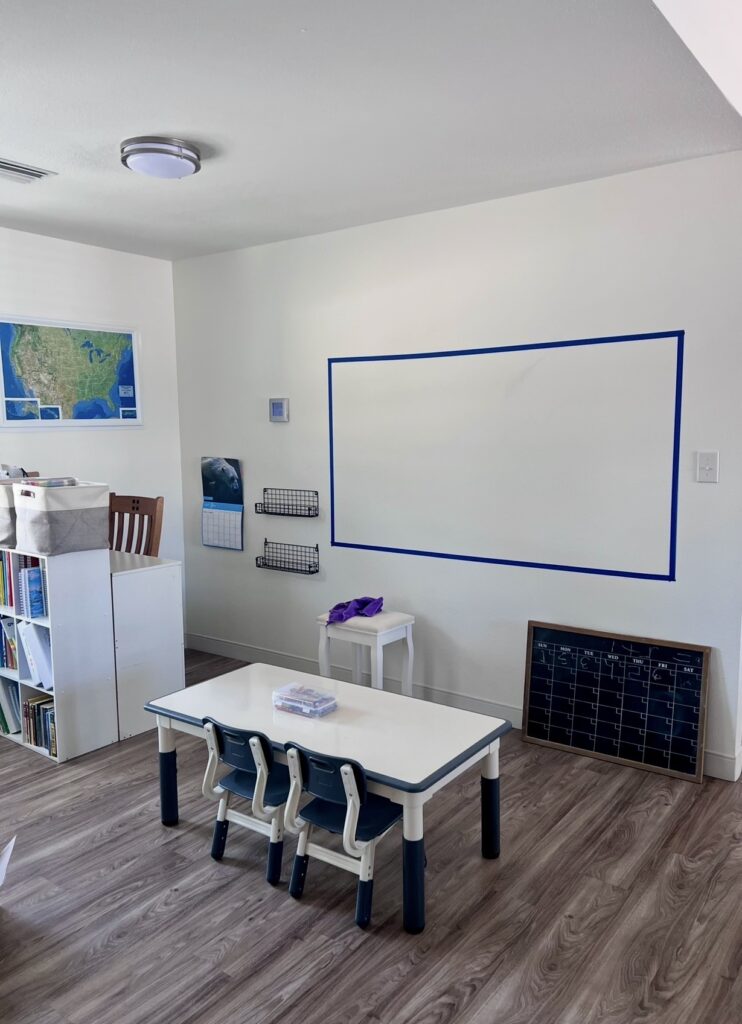
I’m focusing on function first, not perfection.
And honestly, I don’t think there’s one “right” way to set up a homeschool space.
Some families homeschool at the dining table. Some on the couch. Some at a desk. Some at the park.
We’ve homeschooled at our dining table for the past two years, and only now are we shifting into a more dedicated space.
The kids don’t need a Pinterest-perfect classroom. They just need a place to learn.
What matters most is that your setup works for your real life.
For me, that means:
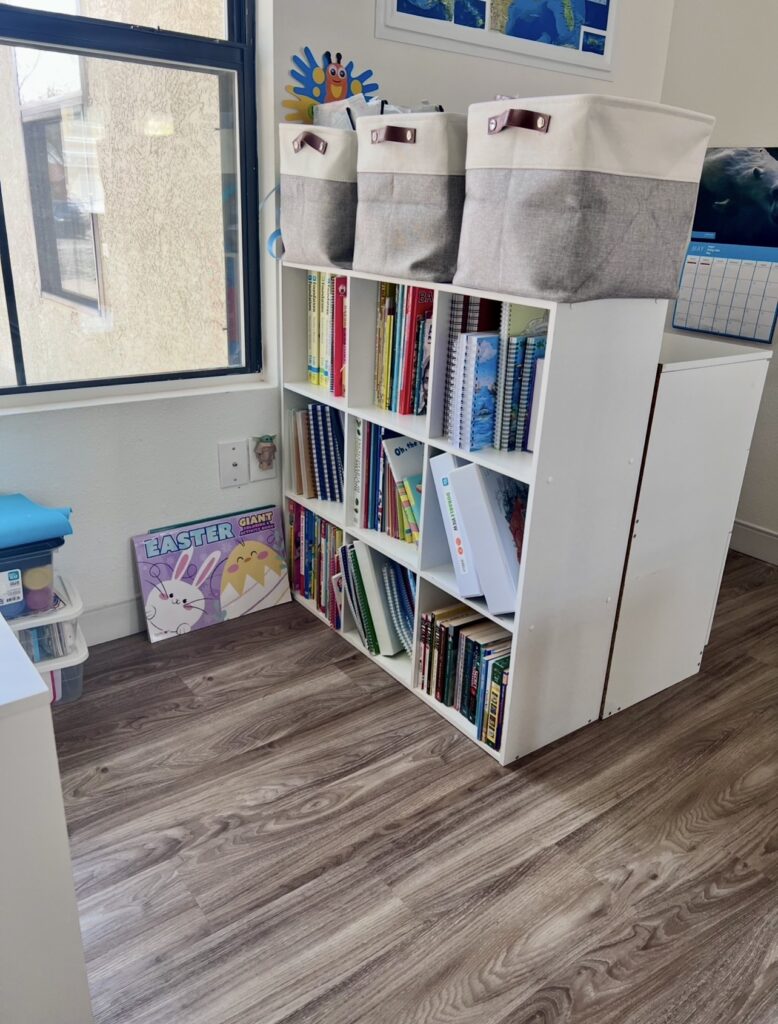
- Keeping things organized
- Using storage that hides visual clutter
- Having systems that are easy for kids to access and put away
Closets, cabinets, bins, baskets—anything that helps contain the chaos so the learning space feels peaceful.
And even if your space changes later, that’s okay. You figure it out as you go.
When should you buy curriculum?
This is one of the most common questions, and honestly—it depends.
I personally like to buy in the spring when I know what I’m leaning toward. A lot of curriculum goes on sale during that time, and I’ve learned to take advantage of that when I can.
But I also don’t believe you should wait too long if you already know what you want.
If it’s a fit, get it.
And if it doesn’t work later? You change it.
I’ve switched curriculum mid-year before. More than once. Because homeschooling gives you the flexibility to adjust as you learn what works for your kids.
Just make sure your budget has a little flexibility built in for those changes.
What supplies do you actually need?
This is another area where it’s easy to overthink.
I like to start simple:
- Basic school supplies (pencils, crayons, markers, glue sticks)
- Tissues and household basics
- Whatever your curriculum specifically requires
After that, everything else is extra.
One of the biggest shifts in homeschooling is realizing not everything needs to be taught in a traditional way or even at a traditional pace.
You are the teacher. You also know your child better than anyone else.
If something isn’t needed or isn’t working, you’re allowed to adjust it.
How I build a routine without overwhelm?
I honestly don’t love the idea of jumping straight from summer chaos into a rigid schedule overnight.
Kids thrive on rhythm—but transitions take time.
Instead of trying to create a perfect schedule before school starts, I focus on easing into it slowly.
That might mean:
- Gradually adjusting wake-up times
- Starting a simple morning rhythm
- Short practice school days before our official start
- Reducing outside commitments temporarily
We homeschool year-round in some form, so we also take breaks when needed instead of having one long summer break that requires months of review afterward.
This helps us stay connected to learning without the pressure of “starting over” every fall.
If creating a family rhythm is something you’re still working on, you may also enjoy my post on creating a simple daily rhythm for your home.
What you shouldn’t do
Don’t overcomplicate the start of your homeschool year.
Try not to get caught up in:
- Perfect field trips or outings right away
- A Pinterest-perfect homeschool room
- Criticism or comparison
- Trying to have everything figured out before you begin
You know your children better than anyone else.
You are allowed to learn as you go.
The first few weeks (and even months) are really about getting into motion. Focus on what matters most:
- Choose your curriculum
- Set up a simple teaching space
- Start teaching
Everything else will slowly fall into place as your rhythm develops.
If you’re wondering where to focus your energy during homeschool back-to-school prep, here’s the simple checklist I use each year.
My Homeschool Back-to-School Prep Checklist
Before we officially start a new homeschool year, I try to focus on a few key areas. None of these things have to be completed perfectly, but having a plan helps our transition feel much smoother.
My homeschool back-to-school prep checklist includes:
- Finalizing curriculum choices
- Ordering any missing supplies
- Decluttering learning spaces
- Organizing books and materials
- Planning our weekly rhythm
- Checking extracurricular schedules
- Updating recordkeeping systems
- Preparing simple meal ideas for busy days
- Resetting expectations for the new school year
When I start feeling overwhelmed, I come back to this list and focus on one thing at a time. Homeschool planning doesn’t have to happen all at once.
Don’t Forget to Prepare Yourself
As homeschool moms, we spend so much time preparing lessons, organizing supplies, researching curriculum, and planning activities that we sometimes forget we’re part of the equation too.
The truth is that preparing for a new homeschool year isn’t just about preparing our children. It’s about preparing ourselves.
For me, homeschool preparation also means:
- Looking honestly at my schedule
- Simplifying commitments
- Planning meals ahead
- Making time for rest
- Setting realistic expectations
I’ve learned that when I’m overwhelmed, the entire homeschool day feels heavier. When I have margin in my schedule and realistic expectations, our days tend to flow much more smoothly.
A peaceful homeschool year starts with a peaceful homeschool mom.
Final Thoughts
If you’re standing in a room full of books, bins, curriculum catalogs, and unfinished projects wondering where to start, start with the next thing in front of you.
You don’t need the perfect homeschool room.
You don’t need the perfect curriculum.
You don’t need the perfect schedule.
You don’t need every field trip planned or every supply purchased.
You simply need a place to begin.
Back-to-school prep isn’t about creating a picture-perfect homeschool year. It’s about creating a home, a rhythm, and a learning environment that supports your family well.
Right now, my own homeschool space is still a work in progress. Curriculum decisions are still being finalized. There are still projects on my list that aren’t finished.
And that’s okay.
Preparation is a process, not a destination.
Take the next step, trust your instincts, and remember that you know your children better than anyone else.
The rest will come one school day at a time.
And starting imperfectly is still starting well.